- Blog
- >
- Turn the Summer Slow-Down Into a Frequency Push
Last updated: June 25, 2026
Turn the Summer Slow-Down Into a Frequency Push

This is Part 2 of our Summer-Prep series — three articles to help you get ahead of the season before it gets ahead of you. If you missed Part 1 (Ending Your Summer Staffing Scramble Before It Starts), start there first. Next up: how to keep your team engaged through the whole stretch.
A summer challenge can drive client frequency — but only if you plan ahead and get your team involved...
Many fitness operators hit the summer slow-down in July and start reactively throwing promos at the wall — discounting their pricing, chasing new clients to replace regulars who’ve slipped away, and undercutting the value they’ve spent all year building. But it doesn’t have to go that way!
What if you got intentional about it now, before the drop happens?
Not all the clients who disappear in the summer are gone. Many are just distracted. And planning ahead gives you a real shot at being one of the things they build their summer around rather than the thing they cancel when it gets busy.
Whether it’s your regulars juggling vacation schedules and kids out of school, or your more inconsistent clients who are finally surfacing after a hectic spring and ready to start something new — a well-timed, seasonal challenge is one of the most effective tools you have to counteract summer retention loss, increase frequency, and drive community. The brands that come out of summer ahead are the ones that plan an opportunity into the season instead of emotionally reacting to the slow-down when it arrives.
So let’s get a challenge (or two) on the books now, while you and your team have time to build it right and start selling it before the cancellations roll in.
Why Challenges Work (it's not just the prize)
A timed challenge isn’t just a promotion. It’s a commitment driver and behavioral economists have studied it extensively because of how effectively it closes the gap between what people intend to do and what they actually follow through on.
When people invest in a defined goal with a clear deadline, they’re more likely to see it through. Clear milestones reduce distraction and create a built-in sense of accomplishment as participants progress. For a newer or inconsistent client, a summer challenge gives them a reason to start, a structure to stay in, and a community to stay accountable to. That’s three barriers removed at once. For your regulars who are traveling on and off, it’s a tool to hold their commitment and increase their frequency before the drift sets in.
The timing is also in your favor. People share and engage online more in the summer than any other season — which means a well-run challenge generates organic reach at exactly the right moment, with ripple effects that can carry your fall momentum too.
Step 1: Get Clear on Your Top Goal
Before you name the challenge or design a single flyer, decide what you’re actually trying to accomplish. The most common mistake is building something that’s trying to do everything at once — retain members, attract new clients, sell packages, fill slow class times — and ending up with a format too complicated to market and too vague to measure. It’s not to say that your challenge may not accomplish multiple objectives but picking your top goal and building everything towards that is a key to success.
So pick one. A few examples:
- Increase frequency among existing clients who are showing up inconsistently, and hold the habit for regulars before they fully fall off
- Give newer or lapsed clients a structured, low-pressure reason to commit to a routine
- Drive community and referrals by creating a shareable, social-friendly experience
The format, length, and messaging of your challenge will look completely different depending on which goal you’re building toward. Decide first, design second.
Step 2: Bring Your Team in Before You Build it Out
Here’s where most owners and managers skip a step — usually because there isn’t time if you wait until July to start planning — but they feel it later.
Once you’ve set the objective, the next move isn’t to design the challenge yourself and hand it down to your team. It’s to share the goal and open up the specifics for input. What should it be called? What format would they actually get excited to promote? What incentive would feel meaningful to clients? What would make it easier — or harder — for them to talk about it on the floor?
When employees are involved in the decision-making process, they feel invested — less like they’re executing someone else’s plan and more like they have real ownership of the outcome. That distinction shows up directly in how they sell the challenge and how much energy they bring to it once it’s live. Research consistently shows that employees who are actively involved in decisions exhibit higher levels of commitment to the outcome.
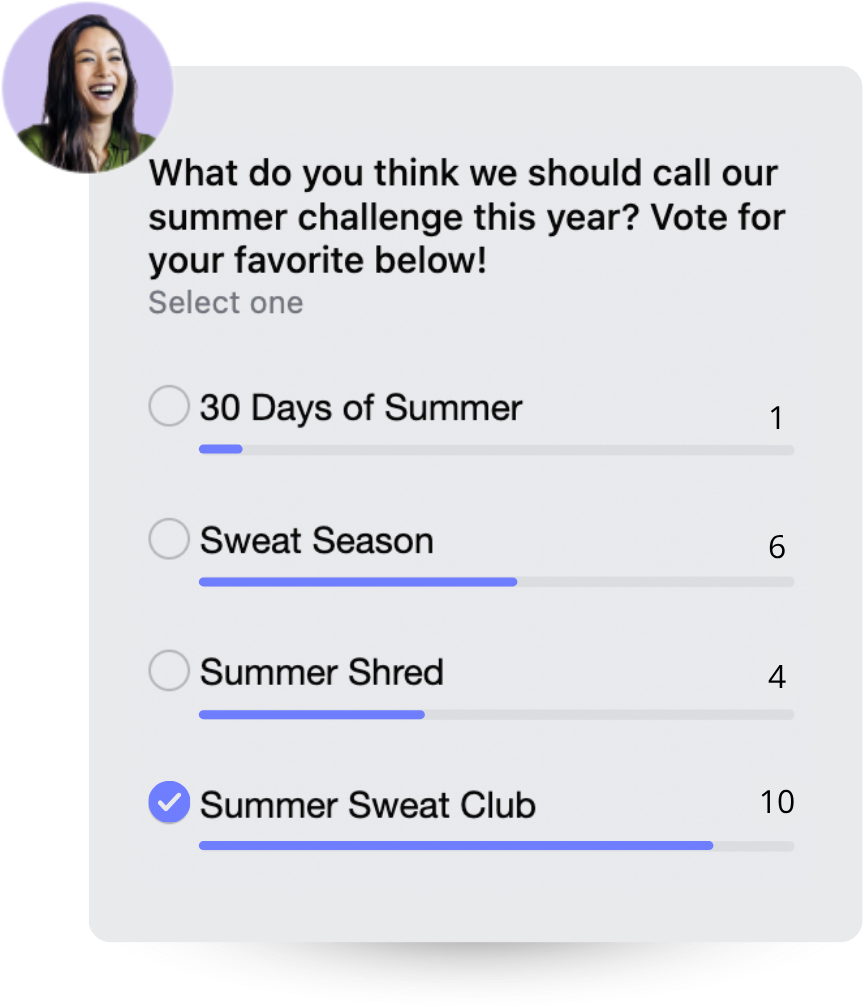
💡Pro Tip: A simple poll in NetGym is a low-lift way to do this well. After you’ve communicated the objective and the logistical parameters — timeframe, general structure, target audience — open it up. Challenge name. Incentive options. You’re not putting the strategy up for a vote. You’re inviting the people who will be selling it every day to help shape the parts that will get them excited to promote it.
Need one place to keep your team connected, from polls to planning? See how NetGym can help.
Step 3: Build a Format That Earns the Commitment
With your goal set and your team’s input collected, consider these three things as you build the format to make the challenge an easy success:
→ Lean into the season. Summer comes with a built-in energy you can’t manufacture in October — people are outside, they’re social, they’re in a “new chapter” headspace, and they’re actively looking for something to be part of. A challenge that taps into that feeling hits differently than anything you could run in the fall. And here’s the thing: the FOMO is built in. Miss it this summer and you’re waiting twelve months. The format, the vibe, the community — that all stays yours. Summer just gives you the wrapper that makes it unmissable and extra special.
→ Keep it simple. A clear timeframe, a clear daily or weekly action, and a finish line people can see from the start. The lower the barrier to participate and least confusion on how to do so, the higher the probability of follow-through. A complicated point system or multi-tier incentive structure will lose people before they begin.
→ Lead with value. Does this challenge give clients (new or existing) a genuine window into what makes your studio worth staying for? Does it highlight your instructors, your community, the experience you’ve built? The promotion is the entry point. The value inside is what converts participants into ongoing clients — and existing clients into more frequent, loyal ones.
Step 4: Get It in Front of the Right People
Once the challenge is designed and your team is bought in, it’s time to think about reach — and this is where a lot of brands leave results on the table.
Your existing clients are your warmest audience, and your organic channels (email, Instagram, in-studio signage and conversations) should be working hard to get them registered early. But reach starts with your team before it ever gets to your clients. Your instructors and front desk staff are talking to members every single day — if they’re not actively selling the challenge from the moment it’s announced, you’re leaving your best marketing channel untapped. Make sure they know the details, believe in the format (which is exactly why Step 2 matters), and have a simple, natural way to bring it up on the floor. We wrote a whole piece on how to get your team genuinely bought in on a promo before it launches — and everything in it applies here. Check it out here →
If you want to use the challenge as a new client acquisition tool too, paid social is worth layering in — especially since summer is when people are actively searching for something to commit to.
💡Pro Tip: Tools like Polaris make it easier than ever to build and run targeted campaigns yourself – without needing a dedicated marketing team! A summer challenge is the perfect opportunity to beta-test how well ads work for you and allow you to put the challenge in front of the right local audience without it becoming a second job to manage or a huge expense. The goal-driven, time-limited nature of a challenge also makes it one of the higher-converting things you can run paid ads against — a specific ask with a clear deadline outperforms generic “come try us” campaigns almost every time!
Step 5: Lock the Operational Side Before You Launch
A challenge that’s well-designed but poorly executed is one of the fastest ways to erode client trust — and one of the most frustrating things you can put your team through. Before anything goes out publicly, the internal logistics have to be airtight.
Who’s tracking participation? How are check-ins recorded? Who is building the follow ups? What about the marketing assets? These things don’t manage themselves, and “we’ll figure it out as we go” is how a good idea turns into a chaotic month.
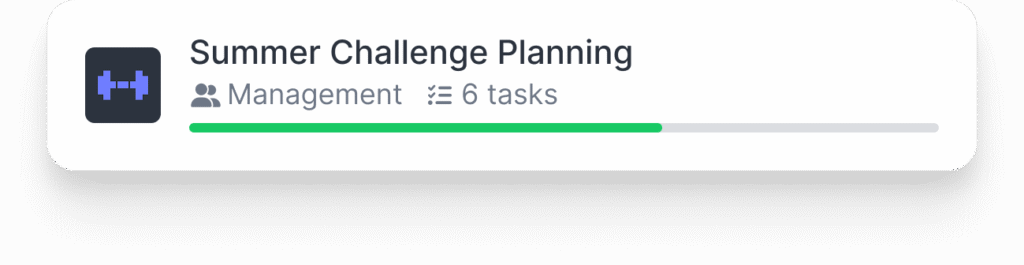
💡Pro Tip: NetGym’s new Task Management feature is built for exactly this. Build out the full challenge checklist, assign owners to each step, set due dates, and keep everything visible across your team so nothing falls through the cracks. A challenge is a time-sensitive, multi-step operation… treat it like one.
Not using NetGym yet? Book a Demo to learn more >
Step 6: Plan the After Before You Launch
This is another step most brands skip — and it’s arguably the most important one.
If a client increases their frequency during a four-week challenge, that behavior is fragile the moment the challenge ends. Without a deliberate follow-up plan, you lose the momentum you just worked hard to build. The window right after a challenge wraps is one of your highest-leverage moments for conversion and retention — and if you’re not ready for it, it closes fast.
Before your challenge even launches, map out what happens on the other side. How will you reach out to participants when it’s over? What will you say to someone who crushed it versus someone who struggled to stay consistent? Is there a natural next step — a membership upgrade, a new session pack, an invite to a follow-up program — that makes sense to offer at that moment?
Your messaging to consistent participants should reinforce the identity shift they just made: they’re someone who shows up. Your outreach to less consistent ones should be warm and forward-looking, not focused on what they missed. Either way, the conversation should already be drafted before day one of the challenge.
Plan the follow-up now. It’s the difference between a challenge that gives you a good July and one that sets your fall up for real growth.
The Payoff
A well-run summer challenge doesn’t just fill your classes in July. It gives existing clients a reason to stay engaged and increase their frequency, gives new clients a low-pressure way to commit, and gives your team something to get behind together — especially when they helped build it.
You can’t control the season. But you can plan into it.
Once the opportunity is designed, your team is bought in, and you’ve mapped the follow-up — the last piece is keeping your people engaged all the way through the summer stretch. We’ll cover that in Part 3.
A Summer Challenge Runs Smoother With the Right Tools
NetGym gives fitness operators one place to build challenge checklists, assign tasks to your team, get them involved and excited, and keep everyone accountable from kickoff to close — so your best summer promo doesn’t fall apart in the execution or team involvement.
Book a demo to see how NetGym can help you run a challenge your team actually pulls off.